The convergence of the physical and digital worlds is no longer science fiction; it is a transformative reality powered by digital twins. These virtual replicas of physical assets, processes, or systems are revolutionizing industries.
The digital twin market is experiencing explosive growth, driven by advancements in AI, IoT, and cloud computing. For companies considering investments to command higher valuations or secure funding, the timing is strategic but requires careful navigation of opportunities and challenges.
I have always found the story of the digital twin fascinating, something my brother and I often “nerd out” on during our after-work calls. Now that the market has continued to grow, I can present you with the latest investment trends and market data.
What are Digital Twins?
Digital twins are dynamic, data-driven models that mirror physical entities in real time. Built using sensor data, connectivity, and advanced analytics, they allow organizations to simulate scenarios, predict outcomes, and optimize performance. Think of testing pre-implementation or modelling a patient’s organ pre-surgery to personalize treatment—the opportunities seem almost endless.
The concept traces back to NASA’s Apollo 13 mission in the 1960s, where physical simulators helped engineers troubleshoot spacecraft malfunctions. Fast-forward to 2002, when Michael Grieves formalized the modern digital twin framework at the University of Michigan. Today, tech giants like Microsoft, AWS, and NVIDIA are driving adoption through platforms like Azure Digital Twins and Omniverse Cloud Services.
Key Technologies
Digital twins rely on a synergy of technologies:
Together, these technologies create a continuous feedback loop—the digital thread—that refines system performance.
Types of Digital Twins
The applications vary by scope and complexity:
Challenges and Limitations
Despite their potential, adoption hurdles persist:
Market Outlook: A $778bn Opportunity by 2024
The digital twin market, valued at $16bn in 2024, is forecasted to explode to $778bn by 2035, at a 42.6% CAGR. Other reports predict even more ambitious growth with a 64.9% CAGR from 2024-2029.
Key Drivers Include:
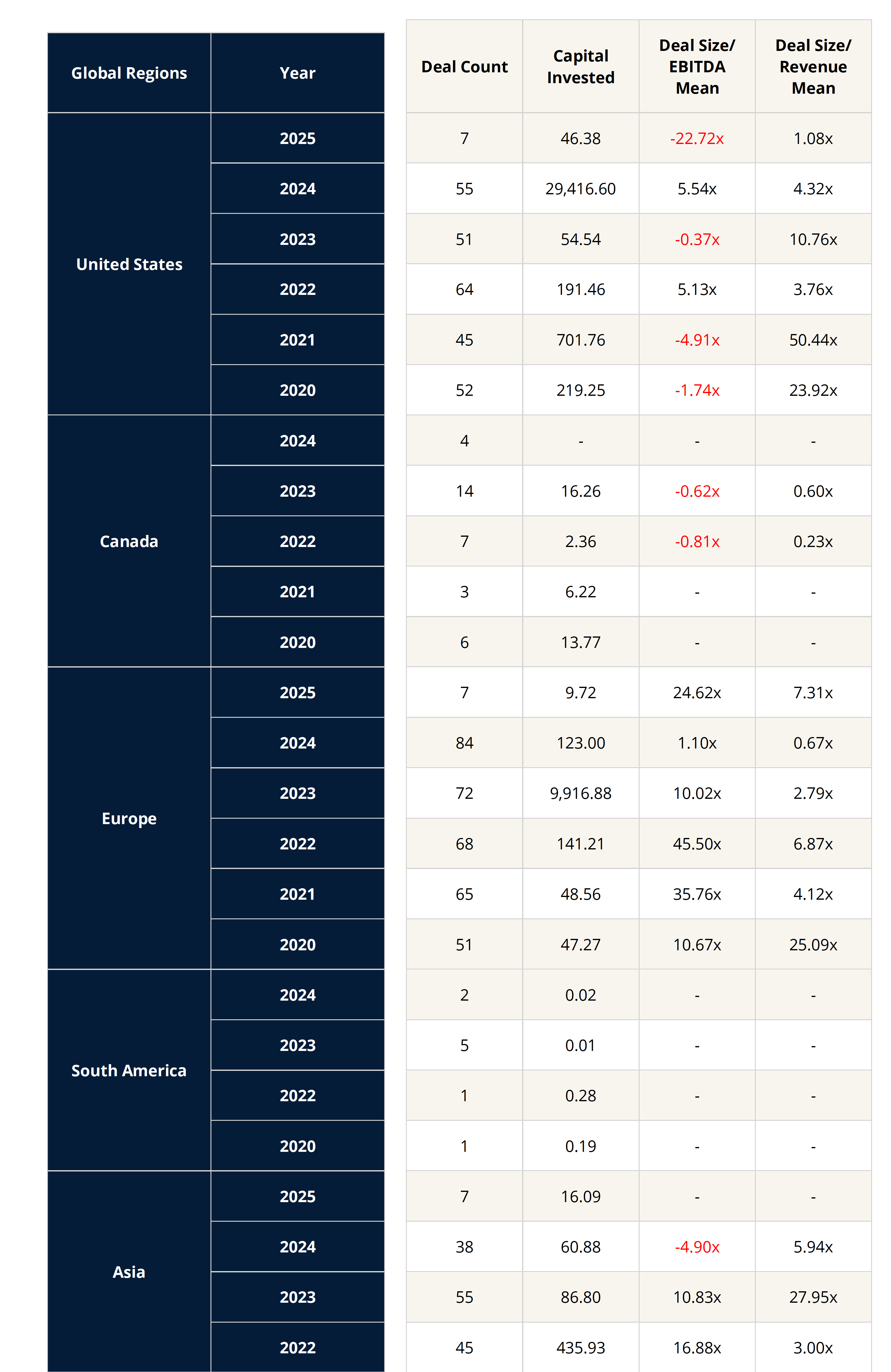
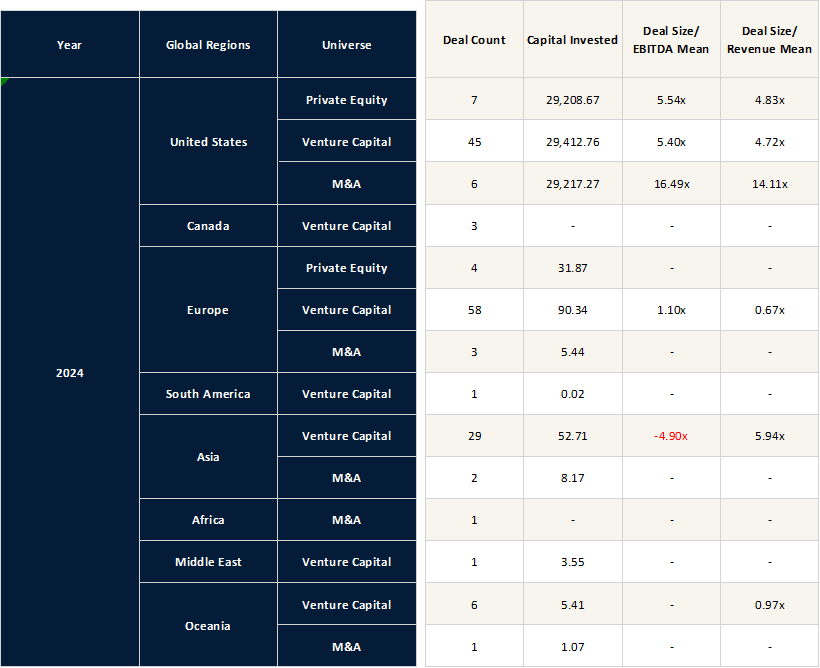
Regional Insights (2024 Data):
Exit Trends:
Companies like Microsoft, Siemens, and NVIDIA are expanding their digital twin platforms, creating opportunities for startups with specialized solutions. The market’s rapid expansion and M&A activity suggest that now is a prime time to invest, particularly in high-growth sectors like healthcare.
Government & ESG Incentives:
Initiatives like the EU’s Destination Earth and Singapore’s city-wide twin project highlight public-sector funding opportunities. Investors also prioritize ESG-aligned projects, such as energy optimization or sustainable urban planning.
Year-on-Year Trends (2020–2025):
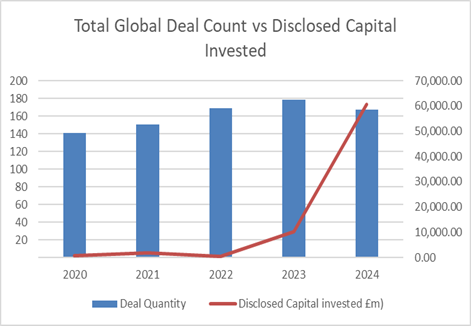
Graph has removed the $27.5bn Synopsys in FY24
Double or Nothing?
Digital twins are more than a trend—they’re a cornerstone of Industry 4.0. As technologies mature and costs decline, their adoption will accelerate, unlocking efficiencies across sectors. For businesses, the message is clear: embrace digital twins now or risk falling behind in the race toward a smarter, interconnected future.
If you would like to chat about fundraising opportunities or anything that peaked your interest in this blog, drop me a note at ebertrand@polestarcf.com.
Original Data Used