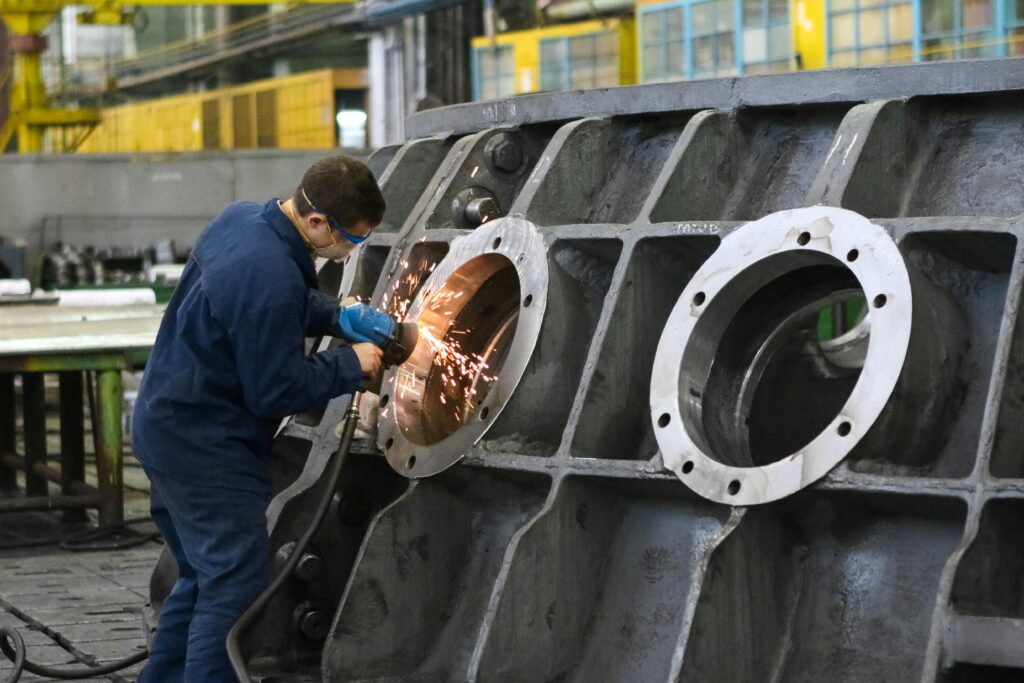
UK manufacturing continued to demonstrate its importance to the economy in 2024, despite pressures from high borrowing costs, skills shortages, supply-chain disruption and geopolitical uncertainty.
Polestar Corporate Finance’s Manufacturing & Distribution 2024 Sector Review and 2025 Outlook explores M&A activity, investor appetite and valuation trends across aerospace, consumer and branded products, construction services, food production, industrial technology, specialist manufacturing, and printing and packaging.
Manufacturing accounted for:
The sector continued to respond to skilled-labour shortages, supply-chain disruption, export challenges and increased cybersecurity requirements. At the same time, stable research and development tax relief, continued capital expensing and investment in new technologies supported confidence in the sector’s longer-term prospects.
The Bank of England and US Federal Reserve reduced interest rates following the peaks recorded in 2023.
Although UK borrowing costs remained high, growing confidence that interest rates were no longer increasing contributed to a more positive outlook for lower and middle-market dealmaking in 2025.
European private equity activity increased by an estimated 18% year on year during 2024, following a period in which high borrowing costs had constrained dealmaking.
Deal value also increased by an estimated 13% in the US and 12% globally.
At the beginning of 2024, private equity firms held approximately 28,000 portfolio companies with a combined value of £2.5 trillion. The proportion of assets held for more than five years had increased by 18% since the end of 2022.
Exit activity subsequently increased during 2024:
Further exits during 2025 were expected to release capital for reinvestment and support renewed private equity dealmaking.
Corporate-led transactions accounted for 63% of UK M&A activity during 2024.
Corporate acquirers had proved more resilient during the preceding downturn in global M&A. Many businesses had also accumulated cash during the period of economic uncertainty, strengthening their capacity to pursue acquisitions.
Skilled-labour shortages remained a significant issue for UK manufacturers. Skills England was introduced to help address the skills gap, while rising employment costs encouraged businesses to explore automation and other efficiency measures.
Some 92% of manufacturers expected staff to represent their highest cost during 2025.
Geopolitical and economic instability continued to disrupt supply chains and create export challenges.
A growing focus on onshore production offered manufacturers an opportunity to reduce reliance on international supply chains while improving resilience and security.
Greater use of data and connected technologies increased manufacturers’ exposure to cybersecurity risks.
Half of UK businesses experienced a cybersecurity breach during the preceding 12 months, based on the UK Government’s Cyber Security Breaches Survey 2024.
The UK Budget maintained stable research and development tax relief and continued full capital expensing.
The Hydrogen Innovation Initiative, led by the High Value Manufacturing Catapult, also explored the role hydrogen could play in future UK manufacturing growth.
Food production remained the largest UK manufacturing subsector.
The production-to-supply ratio reached 62% across all food and 74% for indigenous food, with both figures increasing from their 2021 levels.
UK pharmaceutical production output increased by 30% over the preceding ten years.
Manufacturing output for intermediary products, including fabricated metals, increased by 40%, supported partly by demand from the construction sector.
The UK maintained a competitive position in industrial technology and electrical components.
Research and development opportunities included navigational, irradiation, electromedical and electrotherapeutic equipment.
Technological developments created some volatility in public-market aerospace valuations.
Drones remained an emerging area, with their practical applications and limitations continuing to develop.
Specialist manufacturing includes innovative and growth-stage businesses that can have lower EBITDA than companies in more mature verticals. This can produce higher EBITDA multiples even where enterprise values remain relatively stable.
Two businesses affected the tracked valuation data during 2024:
Technology adoption continued to change how manufacturing businesses operate.
Larger manufacturers were expected to lead the adoption of smart factories and advanced tools. Their investment could help smaller businesses identify the technologies most suitable for their operations before committing capital.
Developments highlighted during the period included:
Coca-Cola announced a planned £42 million investment in an automated storage and retrieval system at its Wakefield site.
Some 29% of manufacturing firms planned to use technology, cloud services or artificial intelligence to support their success during 2025.
Technology adoption was accompanied by additional regulatory and cybersecurity considerations.
Manufacturers were preparing for requirements including:
Cloud-based systems offered greater flexibility and scalability, but manufacturers also needed to consider proactive cybersecurity strategies.
Manufacturing businesses typically have higher energy requirements than companies in many other sectors. Energy pressures following Russia’s invasion of Ukraine brought cost efficiency and sustainable operations into sharper focus.
Areas of development included:
Greater ESG monitoring and reporting requirements were expected to maintain the focus on sustainable operations.
Valuation multiples across the relatively mature manufacturing sector remained broadly stable during 2024.
Aerospace and specialist manufacturing experienced greater volatility because of technological developments and the growth-stage characteristics of some businesses.
Polestar CF tracked public-company revenue and EBITDA multiples across:
There was insufficient comparable data to calculate a representative aerospace EBITDA multiple.
Global elections and economic uncertainty affected manufacturing and distribution deal activity during 2024.
Consumer and branded products and construction recorded small increases in UK transaction volumes compared with 2023. The other manufacturing verticals reviewed recorded a decline.
Trade buyers continued to dominate the market, with international acquirers particularly active. International investors and strategic acquirers represented 37% of the manufacturing and distribution market during 2024.
Polestar CF completed two transactions in the sector:
Many manufacturing companies remain established, family-owned businesses. Transaction volumes could increase as more owners consider retirement and exit.
Private equity investors continue to find manufacturing attractive because the sector can offer:
Private equity investment can provide manufacturers with additional capital, strategic direction and resources to support sustainable growth.
Strategic acquirers also use transactions to acquire assets, supply chains and customers. Resilient technology systems are particularly attractive, while sustainable operating practices can command a premium from trade buyers facing greater ESG reporting requirements.
Private equity investors highlighted during 2024 included:
Active strategic acquirers included:
Air Control Entech manufactures remote-access inspection tools for use in aviation products. SRJ Technologies Group acquired the company for approximately £15 million in July 2024.
Crosta & Mollica produces artisanal Italian bakery products. Perwyn acquired the company for £78 million in January 2024 before partially selling it to Connection Capital for an undisclosed amount in October.
PAR Group manufactures sealing plastics. R&G Fluid Power acquired the company for approximately £37 million in April 2024, representing a reported revenue multiple of 2.9x.
Codeology manufactures and designs inkjet coders, printers and automated end-of-line labelling systems. Control Print acquired a 50.5% interest for £1 million in February 2024.
UK manufacturers entered 2025 with a combination of optimism and realism.
Some 63% believed the opportunities within the sector outweighed the risks, although only 37% expected economic conditions to improve during the year.
Important areas of focus included:

Manufacturing accounted for 8.8% of UK economic output, equivalent to £217 billion in gross value added. It also represented 8.1% of UK employment, 45% of exports and £38.8 billion of investment.
Skills shortages, supply-chain disruption, export pressures, energy costs and cybersecurity were among the principal challenges affecting the sector.
Consumer and branded products and construction recorded small increases in UK transaction volumes compared with 2023. The other manufacturing verticals reviewed experienced lower transaction activity.
International investors and strategic acquirers represented 37% of the manufacturing and distribution market during 2024. Trade buyers continued to account for most transactions.
Manufacturing businesses can offer steady cash flows, valuable assets, established expertise and opportunities for operational improvement, technology investment and buy-and-build strategies.
Strategic acquirers seek opportunities to acquire assets, supply chains and customers. Resilient technology systems and sustainable operating practices are also attractive.
Manufacturers are investing in smart factories, automation, cloud-based systems, artificial intelligence, wireless technologies, edge servers and the integration of operational and information technology.
Cybersecurity is becoming more important as manufacturers use more data and connected technology. Half of UK businesses experienced a cybersecurity breach during the preceding 12 months.
Some 63% of manufacturers believed the opportunities in the sector outweighed the risks, although only 37% expected economic conditions to improve. Technology adoption, onshore manufacturing, sustainable operations and the UK Government’s Industrial Strategy were important areas of focus.